
Category: Uncategorized

  • Best Mutual Fund Advisor in Ahmedabad

    Best Mutual Fund Advisor in Ahmedabad

    Best Mutual Fund Advisor in Ahmedabad – Aarav Investments (Abhishek Viramgami)

    Aarav Investments is one of the best mutual fund advisors in Ahmedabad, Gujarat, helping individuals, families, business owners, and NRIs make smarter investment decisions. Led by Abhishek Viramgami, Aarav Investments is an AMFI-Registered Mutual Fund Distributor providing professional guidance in Mutual Funds, SIP Planning, Portfolio Management Services (PMS), Fixed Deposits, Insurance, Pension Planning, Tax-Saving Investments, Retirement Solutions, and NRI Investment Planning.

    With a strong focus on transparent advice and goal-based investment planning, Aarav Investments helps Indian and NRI investors create long-term wealth while managing risk effectively.

    Why Aarav Investments is Among the Best Mutual Fund Advisors in Ahmedabad

    1. Personalized Investment Planning

    Every investor has different financial goals.

    Someone may want to plan for retirement, while another investor may focus on children’s education, wealth creation, financial security, or managing investments in India while living abroad.

    For NRIs, managing Indian investments can become challenging due to distance, changing financial needs, and portfolio monitoring requirements.

    Aarav Investments helps NRI investors with structured investment planning, mutual fund guidance, SIP investments, PMS solutions, and long-term wealth management in India.

    2. Trusted Financial Partner for Families & NRIs

    Building wealth requires patience and consistent decision-making.

    Aarav Investments focuses on developing long-term relationships with resident Indians as well as NRIs by providing:

    • Regular investment guidance
    • Transparent communication
    • Portfolio reviews
    • Goal-based financial planning
    • Support for managing Indian investments from abroad

    Our aim is to make investing simple and convenient whether you are living in Ahmedabad or anywhere across the world.

    3. Complete Wealth Management Solutions

    Aarav Investments provides multiple financial solutions including:

    • Mutual Funds
    • SIP Investment Planning
    • NRI Mutual Fund Investment Guidance
    • Portfolio Management Services (PMS)
    • Fixed Deposits
    • Insurance Planning
    • Pension Planning
    • Tax-Saving Investments
    • Retirement Solutions

    This allows individuals, families, and NRIs to manage different financial needs under one trusted platform.

    Benefits of Working With Aarav Investments

    Complete Financial Guidance

    Whether you need mutual funds, SIP planning, insurance, fixed deposits, PMS, NRI investment solutions, or retirement planning, Aarav Investments provides complete financial planning support.

    For NRIs living in countries like the USA, UK, Canada, UAE, Australia, Africa and other parts of the world, Aarav Investments helps maintain a connection with Indian investment opportunities through professional guidance and regular support.

    Start Your Investment Journey With Aarav Investments

    If you are searching for the best mutual fund advisor in Ahmedabad or a trusted NRI investment advisor in Gujarat, Aarav Investments can help you plan your financial future with confidence.

    Get expert guidance for SIPs, mutual funds, PMS, insurance, fixed deposits, retirement planning, and NRI investment solutions.

    Aarav Investments – ARN – 264373
    AMFI-Registered Mutual Fund Distributor

    📍 511, Sun Avenue One, near Manekbag Society, behind Shreyas Foundation, Ahmedabad, Gujarat 380015

    📞 Call Or Whatsapp: 079907 44040

    Build your wealth with smart investment planning — because your financial goals are our mission.


    📞 +91 79907 44040 | 🌐 aaravinvestments.in | Insta: @aaravinvestments7
  • Active vs Passive: Which Mutual Fund Strategy Fits Your Investment Style?

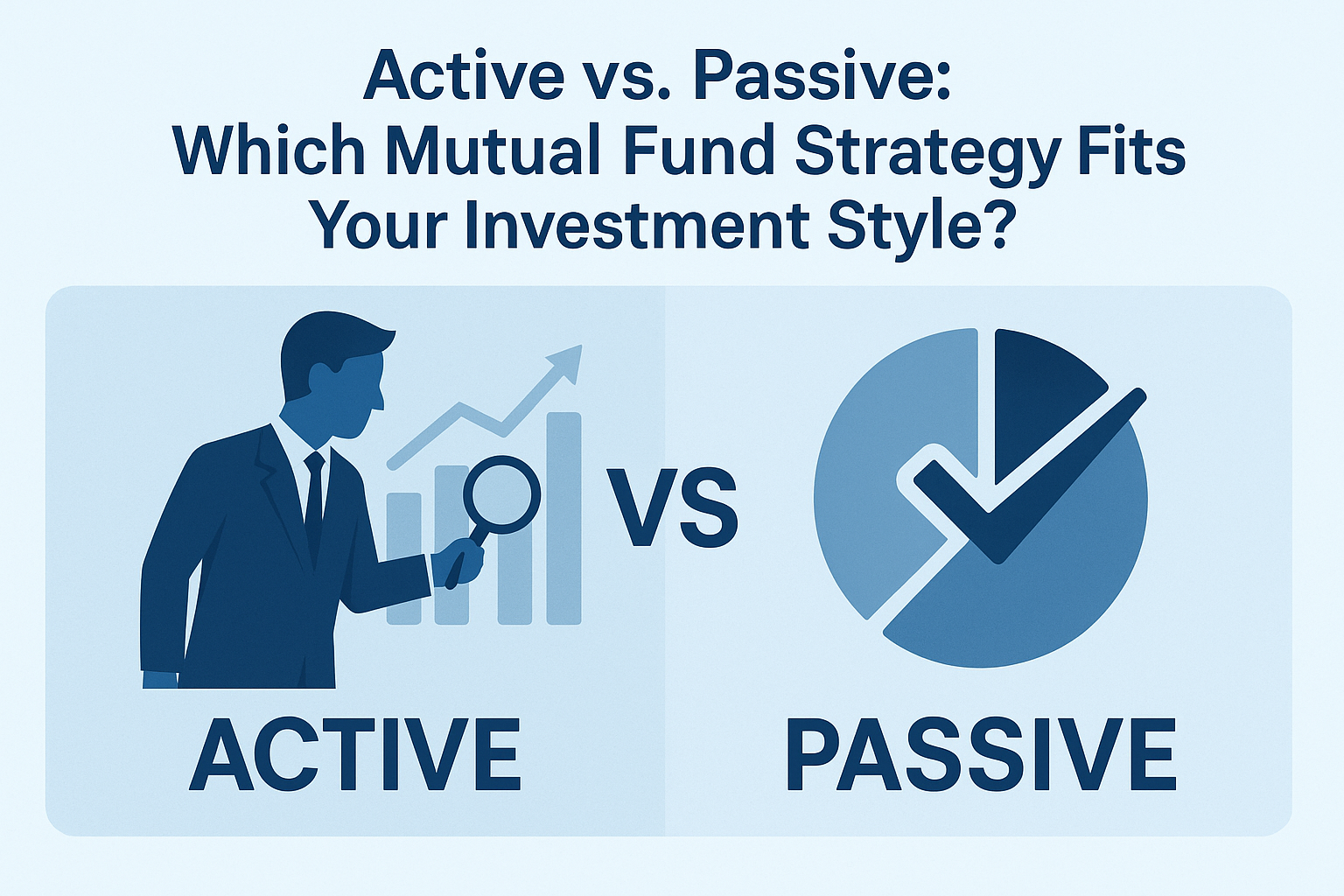
    Active vs Passive: Which Mutual Fund Strategy Fits Your Investment Style?

    “Active vs Passive: Which Mutual Fund Strategy Fits Your Investment Style?” 

    The stock market can often feel like a rollercoaster ride—soaring one moment and plunging the next. This inherent volatility makes it tough for many investors to stay committed, especially those seeking consistent returns. As a result, choosing the right investment vehicle becomes one of the most important financial decisions you’ll make. 

    Historically, many turned to actively managed funds, hoping professional fund managers could outperform the market. However, in recent years, this strategy has come under scrutiny. The spotlight has now shifted to index funds—low-cost, passively managed options that aim to mirror market indexes rather than beat them. 

    But which is the better choice: active or passive funds? Let’s explore both to help you determine what suits your investment goals. 

    📘 Understanding the Basics: Index Funds vs. Actively Managed Funds 

    Index funds are mutual funds or ETFs designed to replicate the performance of a specific market index (like the Nifty 50 or Sensex). These funds hold the same securities in roughly the same proportions as the index they follow. 

    Because they require little active oversight, index funds generally come with lower management fees. They’re popular among investors who prefer a hands-off, cost-effective approach to long-term investing. 

    In contrast, actively managed funds involve a team of fund managers and analysts who make real-time decisions about which securities to buy or sell. Their goal is to outperform market benchmarks. 

    While they provide more flexibility and the potential for higher returns, they also come with higher expense ratios due to the active management involved. 

    💡 The Core Differences: Active vs. Passive Investing 

    Criteria  Index Funds (Passive)  Actively Managed Funds 
    Management Style  Follows a fixed index  Professional managers make decisions 
    Cost  Low expense ratios  Higher management fees 
    Performance Goal  Match the market  Beat the market 
    Risk Level  Lower (market-linked)  Higher (depends on strategy) 
    Diversification  Broad market exposure  Varies based on fund focus 

    🧠 When Does Passive Investing Make Sense? 

    Index funds are ideal for: 

    Long-term investors with a low-risk appetite 

    Those who want minimal involvement in day-to-day investment decisions 

    Individuals looking for low-cost, tax-efficient investments 

    Benefits include: 

    Lower fees 

    Simple portfolio management 

    Exposure to a wide market or sector 

    However, index funds might underperform in bullish markets or during times when specific sectors or companies are outperforming. 

    🏦 When Might Active Management Be Worth It? 

    Actively managed funds are more suitable for: 

    Investors seeking potentially higher returns 

    Those who trust fund managers to make tactical decisions 

    Individuals with a moderate to high-risk tolerance 

    Benefits include: 

    Potential to beat market returns 

    Customized portfolio strategies 

    Greater focus on emerging sectors or undervalued stocks 

    But these advantages come at a cost—and success heavily depends on the manager’s expertise. 

    📉 Downsides to Consider 

    Index Funds: 

    Limited flexibility 

    No ability to respond quickly to market changes 

    May not align with personal investment preferences 

    Active Funds: 

    Higher fees can eat into returns 

    Performance isn’t guaranteed and may lag behind benchmarks 

    Heavily dependent on fund manager’s skill 

    🧾 Final Thoughts: Which Should You Choose? 

    There’s no one-size-fits-all answer. The best choice depends on your financial goals, investment horizon, and risk tolerance. For some, the simplicity and reliability of index funds are perfect. For others, the potential rewards of active funds make the added costs worthwhile. 

    In many cases, a hybrid approach works best—combining both types of funds to build a well-diversified portfolio that balances risk and reward. 

    Key Takeaway: 
    Know your goals, assess your comfort with risk, and choose a fund type—or combination—that supports your financial journey. 


    📞 +91 79907 44040 | 🌐 aaravinvestments.in | Insta: @aaravinvestments7
  • Form 15G and Form 15H – why you must file to save TDS

    Understanding Form 15G and Form 15H: A Comprehensive Guide

    In the realm of taxation in India, there are several forms and documents that individuals need to be familiar with to comply with the regulatory requirements. Two such forms are Form 15G and Form 15H, which are used to declare that an individual’s income is below the taxable limit and hence, not subject to TDS (Tax Deducted at Source). In this article, we will delve into the details of these forms, their purpose, eligibility criteria, and the process of submitting them.

    Form 15G and Form 15H are valid for one financial year. So, please submit these forms every year at the beginning of the financial year. This will ensure that the bank does not deduct any TDS on your interest income.

    Form 15G and Form 15H: An Overview:

    Form 15G and Form 15H serve the same purpose but cater to different categories of taxpayers. They are primarily meant to prevent the deduction of tax at source on certain types of income for individuals who are not liable to pay taxes on their total income. The forms act as self-declaration forms to be submitted to the payer (bank, financial institution, or any other entity responsible for making the payment).

    Form 15G is applicable to individuals below the age of 60 years, Hindu Undivided Families (HUFs), trusts, or any other non-corporate entities. On the other hand, Form 15H is specifically designed for senior citizens (individuals aged 60 years or above). By submitting these forms, eligible individuals can prevent tax deduction at source on their interest income, dividends, or other income sources, subject to specific conditions.

    Eligibility Criteria:

    To avail the benefits of Form 15G or Form 15H, individuals must meet certain eligibility criteria, including:

    1. Form 15G: a. The individual should be a resident Indian. b. The individual’s age must be below 60 years (in the case of individuals and HUFs). c. The total estimated income for the financial year should be below the taxable threshold.

    2. Form 15H: a. The individual should be a resident Indian. b. The individual’s age must be 60 years or above during the financial year. c. The estimated tax liability for the financial year should be nil.

    It is important to note that these forms need to be submitted separately for each financial year and for each payer, depending on the income received from them.

    Submission Process:

    The process of submitting Form 15G or Form 15H is relatively straightforward. Here are the steps to follow:

    1. Obtain the relevant form: Form 15G and Form 15H are readily available on the websites of banks, financial institutions, or can be obtained from income tax offices.

    2. Fill in the necessary details: Carefully fill in the required details such as name, address, PAN (Permanent Account Number), previous assessment year, estimated income, etc.

    3. Attach supporting documents: In some cases, supporting documents such as a photocopy of PAN card or identification proof may be required. Ensure that these documents are attached as per the instructions mentioned in the form.

    4. Submit the form: Once the form is duly filled and signed, submit it to the respective payer or deductor responsible for deducting tax at source.

    5. Retain a copy: It is advisable to keep a copy of the submitted form for future reference.

    Conclusion:

    Form 15G and Form 15H provide individuals an opportunity to avoid TDS on their income if they fall within the prescribed eligibility criteria. These forms play a crucial role in reducing the administrative burden on taxpayers who are not liable to pay taxes on their total income. However, it is important to ensure that the information provided in these forms is accurate and in compliance with the income tax regulations. It is recommended to seek professional advice or consult the income tax department


    📞 +91 79907 44040 | 🌐 aaravinvestments.in | Insta: @aaravinvestments7