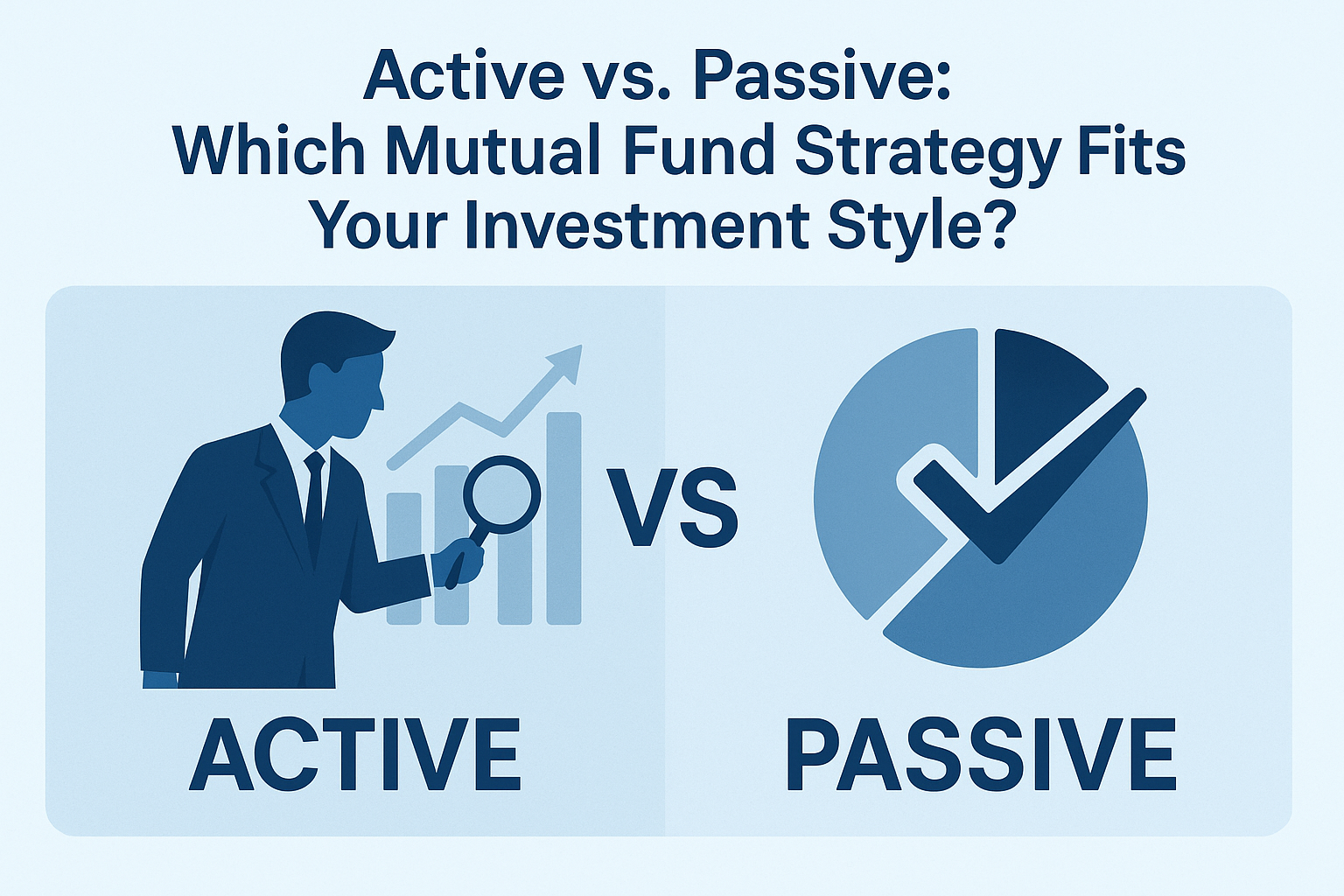
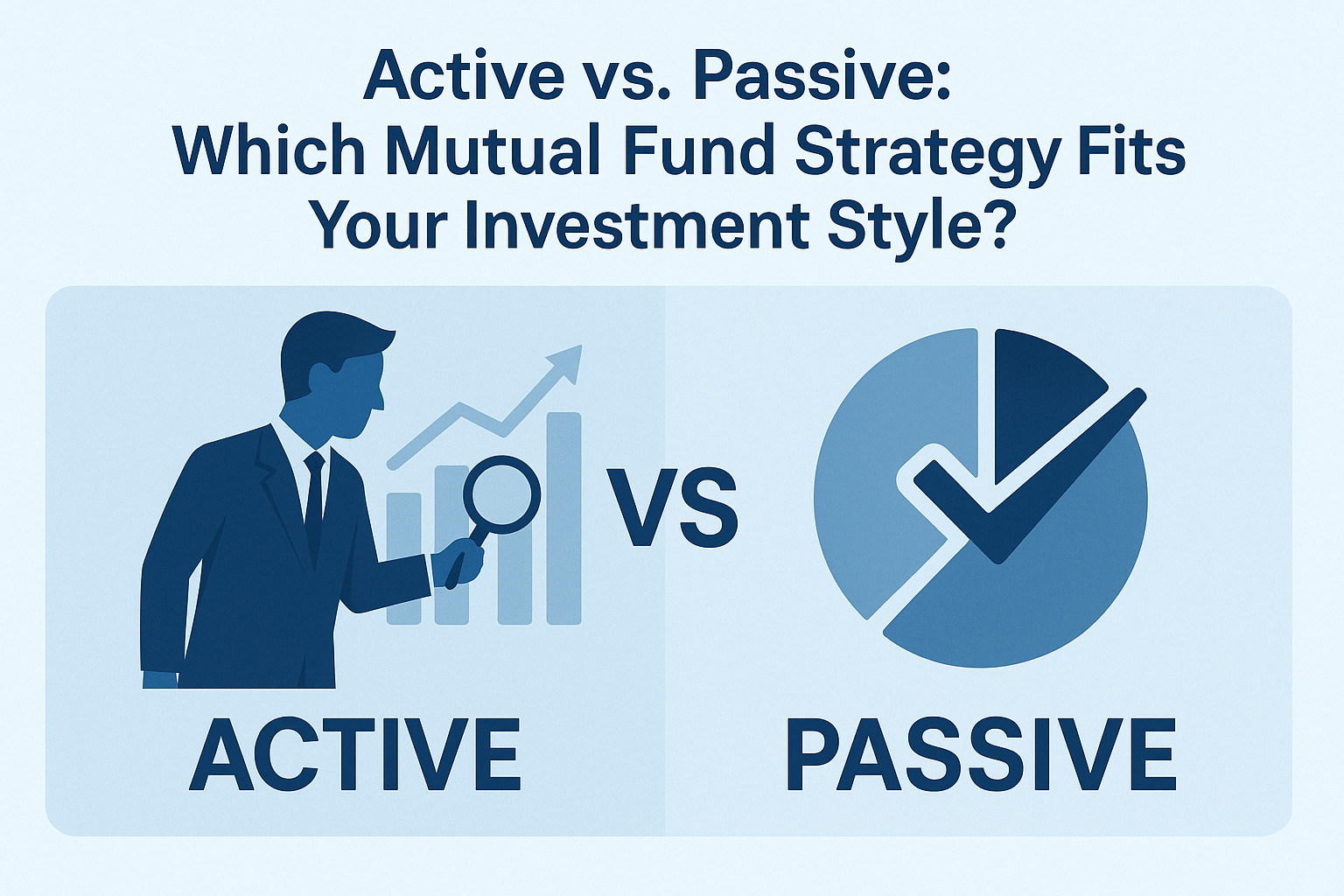
“Active vs Passive: Which Mutual Fund Strategy Fits Your Investment Style?”
The stock market can often feel like a rollercoaster ride—soaring one moment and plunging the next. This inherent volatility makes it tough for many investors to stay committed, especially those seeking consistent returns. As a result, choosing the right investment vehicle becomes one of the most important financial decisions you’ll make.
Historically, many turned to actively managed funds, hoping professional fund managers could outperform the market. However, in recent years, this strategy has come under scrutiny. The spotlight has now shifted to index funds—low-cost, passively managed options that aim to mirror market indexes rather than beat them.
But which is the better choice: active or passive funds? Let’s explore both to help you determine what suits your investment goals.
📘 Understanding the Basics: Index Funds vs. Actively Managed Funds
Index funds are mutual funds or ETFs designed to replicate the performance of a specific market index (like the Nifty 50 or Sensex). These funds hold the same securities in roughly the same proportions as the index they follow.
Because they require little active oversight, index funds generally come with lower management fees. They’re popular among investors who prefer a hands-off, cost-effective approach to long-term investing.
In contrast, actively managed funds involve a team of fund managers and analysts who make real-time decisions about which securities to buy or sell. Their goal is to outperform market benchmarks.
While they provide more flexibility and the potential for higher returns, they also come with higher expense ratios due to the active management involved.
💡 The Core Differences: Active vs. Passive Investing
| Criteria | Index Funds (Passive) | Actively Managed Funds |
| Management Style | Follows a fixed index | Professional managers make decisions |
| Cost | Low expense ratios | Higher management fees |
| Performance Goal | Match the market | Beat the market |
| Risk Level | Lower (market-linked) | Higher (depends on strategy) |
| Diversification | Broad market exposure | Varies based on fund focus |

🧠 When Does Passive Investing Make Sense?
Index funds are ideal for:
Long-term investors with a low-risk appetite
Those who want minimal involvement in day-to-day investment decisions
Individuals looking for low-cost, tax-efficient investments
Benefits include:
Lower fees
Simple portfolio management
Exposure to a wide market or sector
However, index funds might underperform in bullish markets or during times when specific sectors or companies are outperforming.

🏦 When Might Active Management Be Worth It?
Actively managed funds are more suitable for:
Investors seeking potentially higher returns
Those who trust fund managers to make tactical decisions
Individuals with a moderate to high-risk tolerance
Benefits include:
Potential to beat market returns
Customized portfolio strategies
Greater focus on emerging sectors or undervalued stocks
But these advantages come at a cost—and success heavily depends on the manager’s expertise.

📉 Downsides to Consider
Index Funds:
Limited flexibility
No ability to respond quickly to market changes
May not align with personal investment preferences
Active Funds:
Higher fees can eat into returns
Performance isn’t guaranteed and may lag behind benchmarks
Heavily dependent on fund manager’s skill

🧾 Final Thoughts: Which Should You Choose?
There’s no one-size-fits-all answer. The best choice depends on your financial goals, investment horizon, and risk tolerance. For some, the simplicity and reliability of index funds are perfect. For others, the potential rewards of active funds make the added costs worthwhile.
In many cases, a hybrid approach works best—combining both types of funds to build a well-diversified portfolio that balances risk and reward.
Key Takeaway:
Know your goals, assess your comfort with risk, and choose a fund type—or combination—that supports your financial journey.
📞 +91 79907 44040 | 🌐 aaravinvestments.in | Insta: @aaravinvestments7
Leave a Reply